About
A gardening assistant that pays attention to your yard.
Every seed packet says the same thing: sow after the last frost. Nothing on it says when that is for your yard, this year, with the weather you actually have. Lushly starts there.

Why it exists
A garden is a place, and the right week for anything depends on that place.
Correct, and no help at all.
A garden is a place, and the right week for anything depends on that place.
Most planning tools are lists and grids. They're correct, and they know nothing about your yard: not when frost really leaves it, where the afternoon shade falls, or what this week's weather is about to do.
So the gardener does the translating. You read the packet, look up your zone, count back the weeks, and hope the spring behaves. Every season, from scratch.
Lushly does that translating with you. It learns your place, remembers what you planted and how it went, and turns general advice into a plan for your beds. Then it gets out of the way so you can go outside.
Where Lushly stands
Where the writers we trust disagree, Lushly has to choose.
Five old arguments, and where we land.
Where the writers we trust disagree, Lushly has to choose.
-
Control / versus Letting go
Eliot Coleman and Masanobu Fukuoka
Coleman spaces his seedbeds to the inch; Fukuoka scattered seed into standing clover.
Lushly: Coleman at the desk, Fukuoka in the bed. Dates and spacing are worked out exactly; then the garden gets a say.
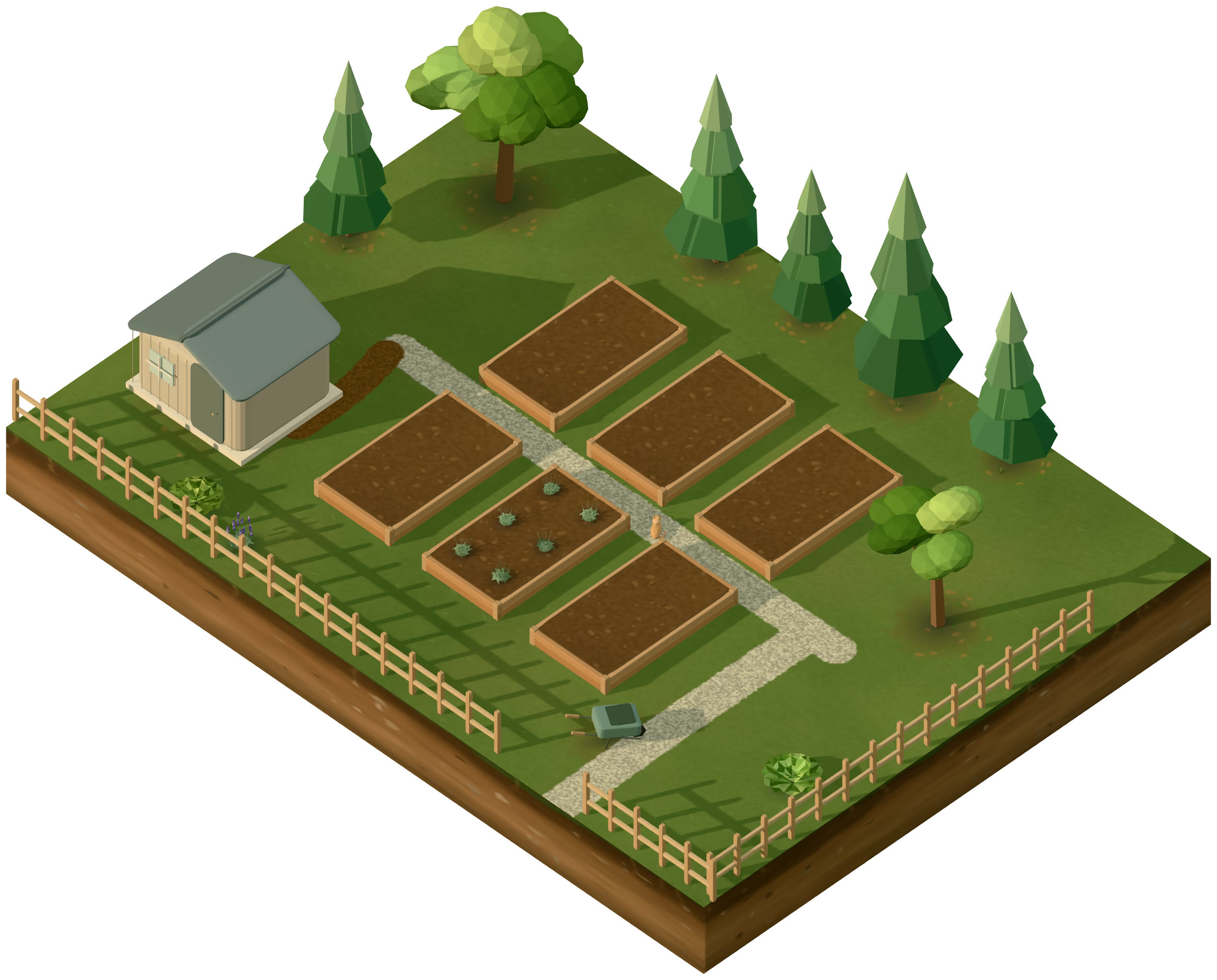
Cabbages, set out on a grid. -
Deep mulch / versus Bare soil
Ruth Stout and the market gardeners
Stout kept her beds under a permanent blanket of hay; market growers want bare ground that warms early.
Lushly: Stout, until you’re sowing. Mulch the established beds, pull it back where seed goes in early, and say which is which.
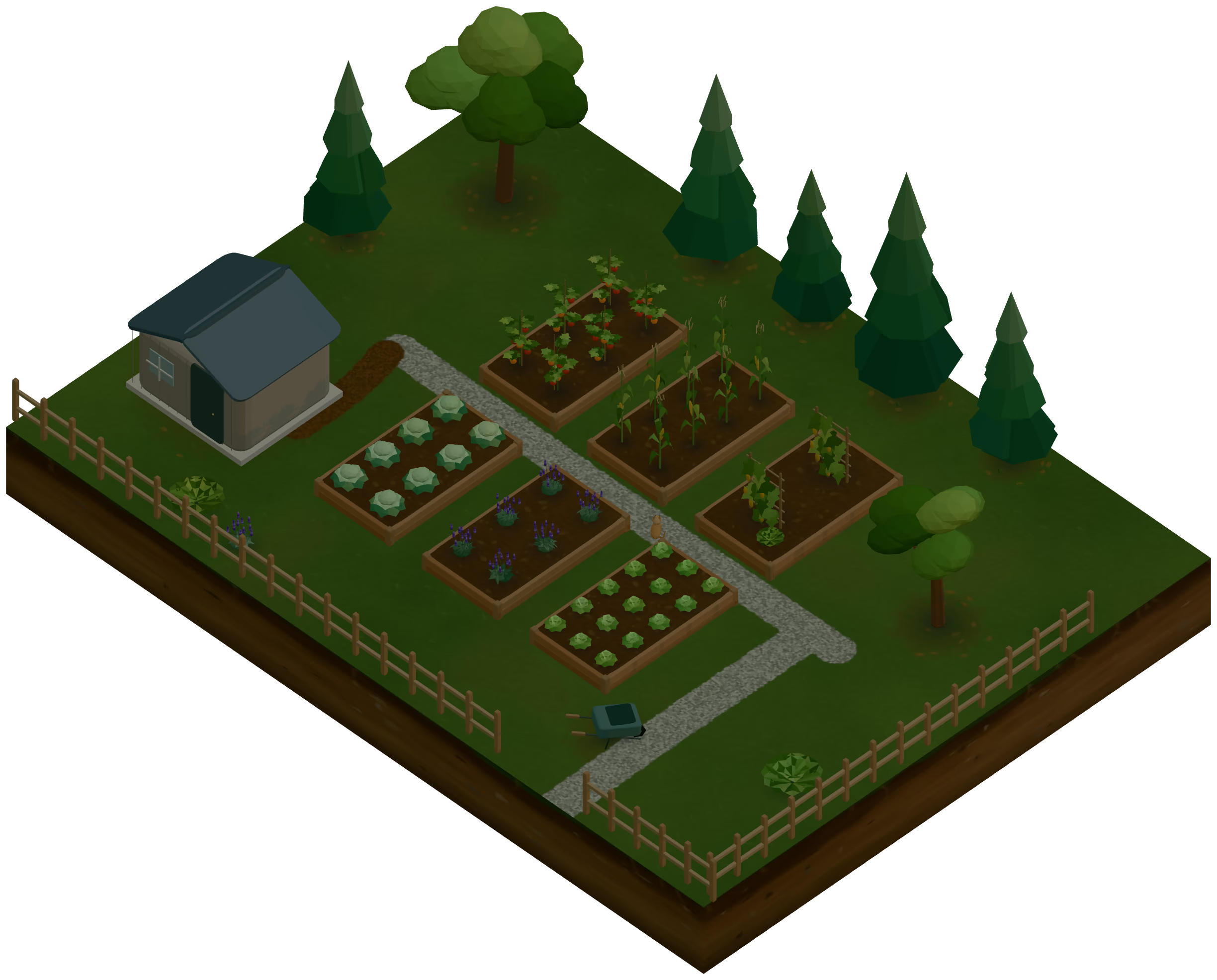
The same beds in January. -
Sacred labor / versus Smart ease
Wendell Berry and Ruth Stout
Berry finds meaning in the work itself; Stout thought needless work meant you were doing it wrong.
Lushly: A split. Lushly takes the counting and the looking-up off you, and leaves the digging where Berry would want it: with you.
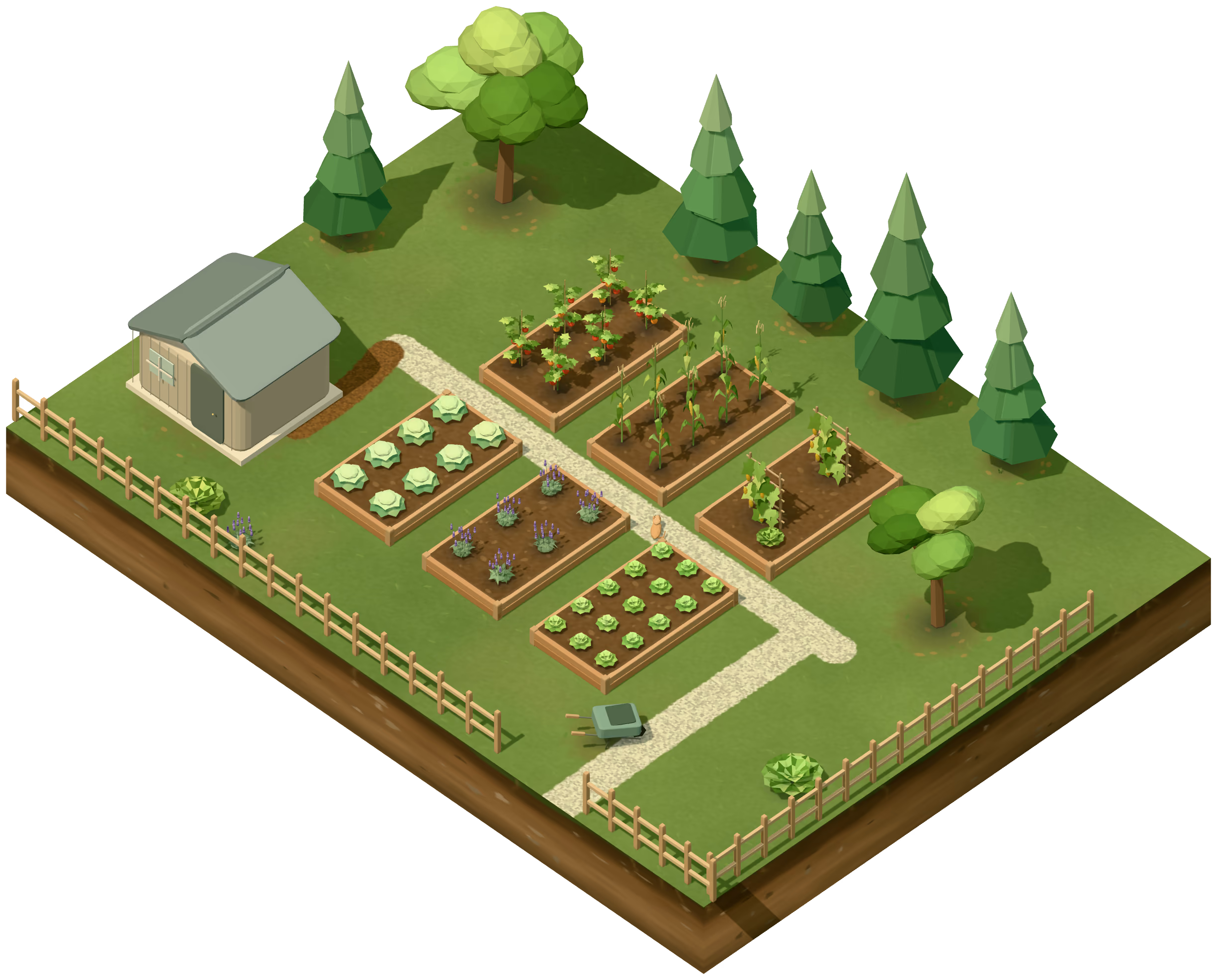
The barrow, left by the lettuce. -
Principle / versus Pragmatism
Wendell Berry and Gene Logsdon
Berry questioned what the tractor did to farms; Logsdon used whatever kept a family on its land.
Lushly: Logsdon, with Berry’s question kept. Lushly will tell you what a method does to your soil. It won’t tell you which gardener to be.
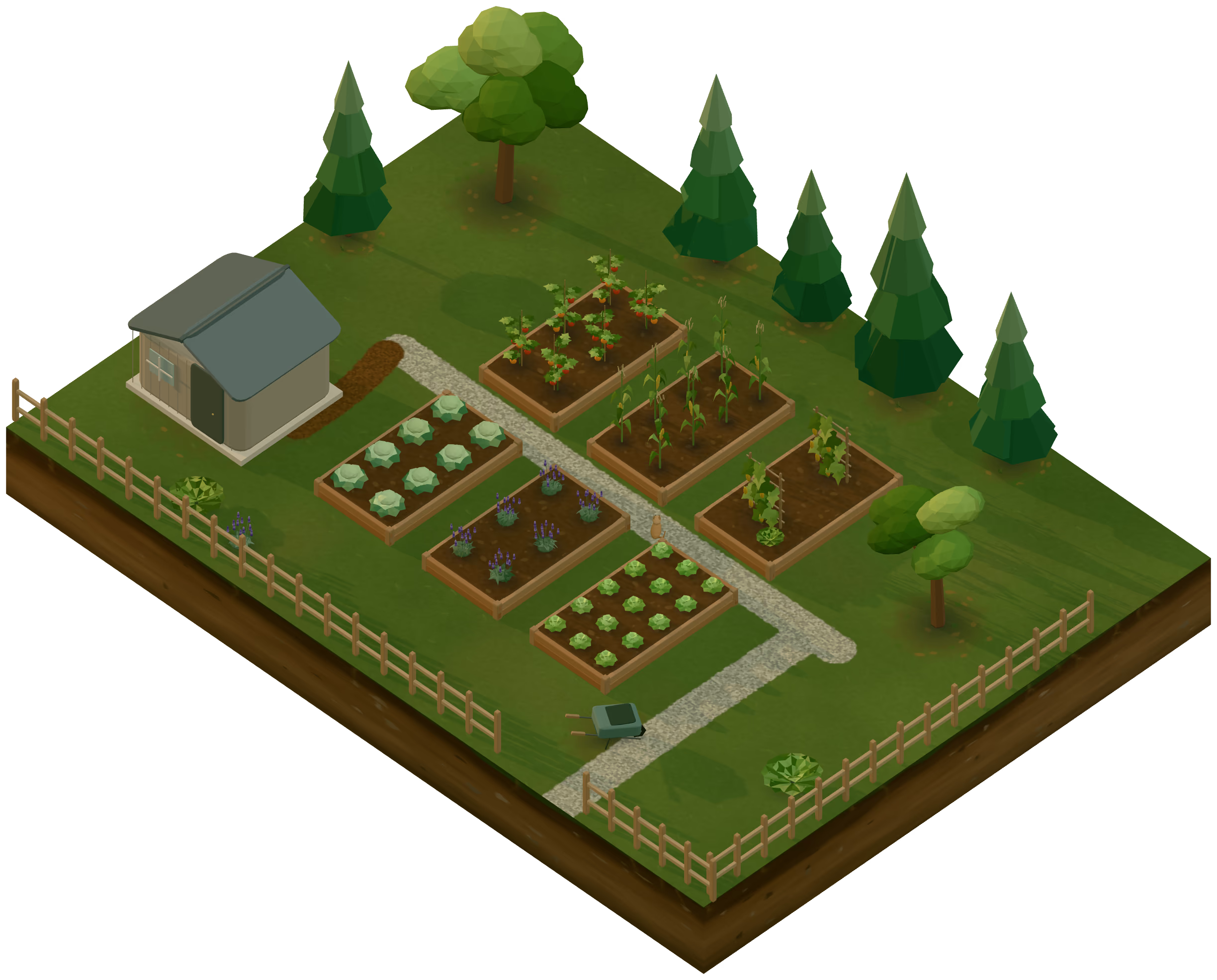
The shed, where the tools live. -
Order / versus Wildness
Eleanor Perényi and Michael Pollan
Perényi saw the garden as culture over the wild; Pollan sees a negotiation with it.
Lushly: Pollan. A productive garden is a beautiful one, and a squash vine across the path is charming, not a problem.
The squash bed, by the path.
The shelf
The books on the shelf, and what Lushly took from each.
The No-Work Garden Book
Brevity, and permission to do less.
The New Organic Grower
Precision when it counts: dates, spacing, season extension.
Braiding Sweetgrass
Reciprocity: the garden gives back when you pay attention.
The Unsettling of America
A deep sense of place: your plot, not a zone.
Second Nature
Curiosity, and the garden as a middle ground between us and the wild.
The One-Straw Revolution
Not every problem needs an intervention.
The Contrary Farmer
Pragmatism without judgment, at any scale.
Green Thoughts
Respect for the craft, and its history.
What we hold to
Each of these is how Lushly is built, not only how it talks.
Six things we won't trade away.
Each of these is how Lushly is built, not only how it talks.
-
01
Your yard first.
Advice starts from your place: where it is, the beds you've drawn, what you've planted, and the weather there this week. It's about your peas, not peas in general.
In your gardenColumbus, Ohio · Zone 6b · last frost Apr 25
-
02
Your data is yours.
By default it's used only to run Lushly. Any wider use is a choice you make, one purpose at a time, and you withdraw it in the same place you gave it. Export and deletion are by request today; doing it yourself in the app is coming.
-
03
Nothing changes without you.
The assistant can suggest a planting, a task or an order. It changes your garden only after you approve that change.
Before any changeApprove · Deny
-
04
Recording is always free.
Every bed, planting, harvest and note, on every plan. Keeping a record is never the thing you pay for.
-
05
Arithmetic is done by arithmetic.
When there's a formula, Lushly uses it. Sowing dates, succession schedules and spacing are worked out in code, and the assistant explains the numbers rather than guessing them.
Worked outLast frost Apr 25, less 6 weeks: sow tomatoes indoors Mar 14
-
06
Honest about what it knows.
It says when it isn't sure, and why. Field Notes list their sources, say how each was reviewed, and mark their AI-generated pictures.
Who makes it
Questions, corrections and arguments all go to the same inbox.
Made by Jason Falk, with the first gardens.
Questions, corrections and arguments all go to the same inbox.
Lushly is a Falk Farm LLC project. It's in preview, and the gardens that join now shape what gets built next.
If you garden and have opinions about what a planner keeps getting wrong, write to hello@lushly.ai. A person reads every message.
Bring your yard, and your opinions.
Disagree with where we landed on one of the five? Join the preview and say so.